
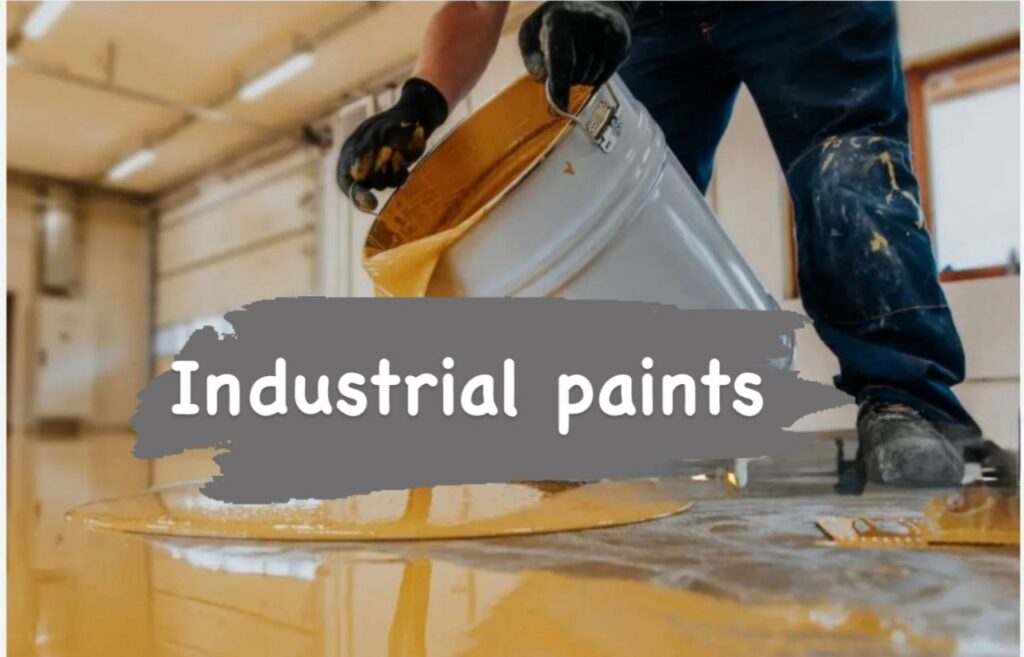
- Industrial paints are specialized coatings formulated to protect surfaces in harsh and demanding environments. They provide resistance against corrosion, chemicals, abrasion, and extreme temperatures, making them essential in manufacturing, construction, and infrastructure sectors
- Applications
- Metal Structures: Bridges, pipelines, tanks, machinery, and steel frameworks.
- Chemical Plants & Refineries: Surfaces exposed to acids, alkalis, or solvents.
- Marine Environments: Ships, offshore platforms, and docks to withstand saltwater corrosion.
- Heavy Equipment: Construction and mining machinery subjected to wear and abrasion.
- Types of Industrial Paints
- Epoxy Paints: Provide excellent adhesion, chemical resistance, and corrosion protection. Often used as primers or topcoats in industrial settings.
- Polyurethane (PU) Coatings: Offer high gloss, UV resistance, and flexibility. Common for outdoor steel structures.
- Alkyd & Synthetic Enamels: Suitable for general industrial applications requiring moderate durability and aesthetic finish.
- Zinc-Rich Primers: Contain zinc particles to provide sacrificial corrosion protection for steel surfaces.
- Industrial paints ensure safety, durability, and longevity of equipment and structures, combining protective and functional performance with professional aesthetics.
- Raw Materials:
- Thermoplastic Acrylic ( TPA )
- 1K + 2K system
- Epoxy Resin + hardener
- Unsaturated Polyester ( UPE )
- Benzyl Peroxide (BPO )